Last Updated:
March 23, 2026
Applying fertilizer is supposed to make your lawn greener and healthier, so seeing yellow patches afterward can be frustrating and confusing. Yellow grass after fertilization often means the application was not done correctly or the lawn has underlying issues. In many cases, the fertilizer did exactly what it was designed to do, but the grass wasn’t in a position to handle it properly.
Keep reading to understand why this happens and how you can help correct the problem to avoid repeating it in the future.
When grass turns yellow after fertilizer treatments, it’s typically reacting to stress rather than a lack of nutrients. Fertilizer changes the chemical balance in the soil, and grass must adjust to that change. If conditions aren’t right, the lawn may respond with discoloration instead of growth.
Yellowing can also be a sign that nutrients are present but unavailable. Poor root function, compacted soil, or improper moisture levels can prevent grass from absorbing what it needs, even when fertilizer is applied correctly.
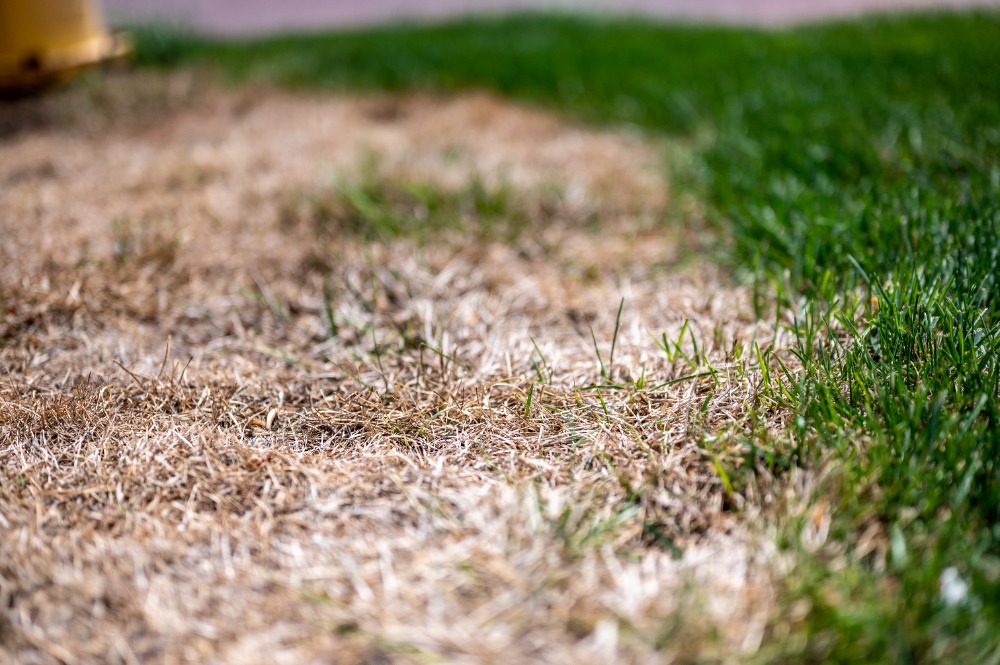
One of the most common reasons lawns turn yellow after fertilization is fertilizer burn. This occurs when too much fertilizer is applied or when nutrients are unevenly distributed across the lawn. Excess salts from fertilizer draw moisture out of grass blades and roots, causing dehydration and color loss.
Burn typically appears in streaks, patches, or along application lines. In mild cases, grass may recover with proper watering. Severe burn, however, can lead to browning and dieback if not addressed quickly.
Nitrogen drives green growth, but too much of it can overwhelm grass. High nitrogen levels can cause rapid, forced growth that the root system cannot support. When this happens, grass may turn yellow as it struggles to balance shoot growth with root health.
This type of yellowing often appears evenly across the lawn rather than in patches. It’s especially common when fast-release fertilizers are applied during warm weather or when the lawn is already under stress.
Water plays a critical role in how fertilizer affects your lawn. Without enough water, fertilizer granules can sit on grass blades and scorch them, leading to yellow tips or patches. On the other hand, excessive watering can wash nutrients past the root zone before grass can absorb them.
Inconsistent watering after fertilization often results in uneven color, where some areas appear yellow while others remain green. Proper irrigation helps dissolve nutrients and move them into the soil evenly.
Applying fertilizer during periods of high heat or drought can trigger yellowing, even if the product is applied correctly. Grass that is already stressed has limited ability to process nutrients, and fertilizer can intensify that stress instead of relieving it.
During hot weather, grass focuses on survival rather than growth. Fertilizer applied under these conditions may cause temporary yellowing as the lawn struggles to adjust.
The worst response to yellowing grass is applying more fertilizer. This often worsens the problem and increases stress. Instead, focus on reducing stress and improving growing conditions.
Helpful steps include:
Yellowing after fertilization isn’t always permanent. In many cases, color begins to improve within one to two weeks as grass adjusts and roots regain balance. Recovery depends on the severity of the stress and how quickly corrective steps are taken.
Light discoloration often resolves with proper watering and mowing adjustments. More severe yellowing may take longer and require soil or nutrient corrections.
Fertilizer works best when grass is actively growing and not under environmental stress. Applying fertilizer during the right season allows grass to process nutrients efficiently without shock.
Matching fertilizer timing to the lawn’s growth cycle reduces the risk of yellowing and promotes steady, healthy color improvement instead of abrupt changes.
Professional lawn care programs are designed to minimize stress and maximize consistency. Professionals choose fertilizer blends based on grass type, season, and weather conditions, reducing the likelihood of overfeeding or burn.
Controlled application rates, proper watering recommendations, and adjustments for heat or drought help prevent yellowing and keep growth balanced. This approach produces more reliable color improvement with fewer setbacks.
Q: Is yellow grass after fertilizing always fertilizer burn?
A: No. Yellowing can also be caused by heat stress, improper watering, or nutrient imbalance.
Q: Will yellow grass recover on its own?
A: Mild yellowing often improves with proper watering and time, but severe cases may require corrective action.
Q: Should I apply more fertilizer if my lawn turns yellow?
A: No. Adding more fertilizer usually increases stress and can worsen discoloration.
Q: Can watering fix yellow grass after fertilizing?
A: Proper watering can help flush excess salts and support recovery, but overwatering should be avoided.
Q: How can I prevent yellowing in the future?
A: Apply fertilizer at the right time, use proper rates, water correctly, and avoid fertilizing stressed lawns.
Q: Does fertilizer type affect yellowing risk?
A: Yes. Fast-release fertilizers increase the risk of yellowing if applied incorrectly or during stressful conditions.


Lincoln's highest-rated lawn care company. Serving the Lincoln, NE area for over 10 years.
Your Lawn. Made Easy.