Last Updated:
February 21, 2026
Nebraska’s weather patterns play a major role in determining how effective lawn fertilization can be throughout the year. Fertilizing without considering weather conditions often leads to uneven growth, nutrient loss, or unnecessary stress on turfgrass. With long winters, hot summers, and rapidly cooling falls, lawns in Nebraska respond very differently to fertilizers depending on when and how they’re applied. Keep reading to learn how to fertilize your lawn the right way!
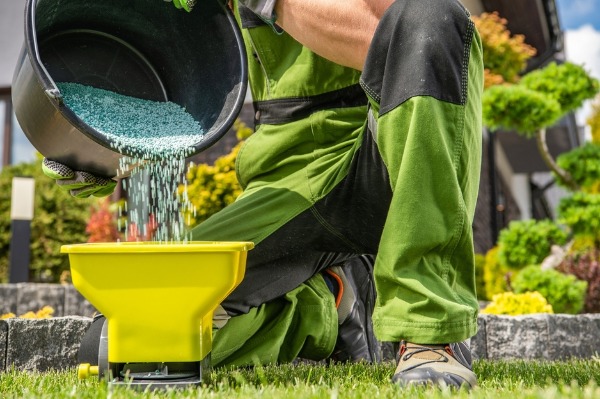
Nebraska sits in a region where weather can change quickly and dramatically. Temperature swings, strong winds, and inconsistent rainfall all affect how nutrients move through the soil and how grass absorbs them. Fertilizer only benefits a lawn when grass is actively growing and capable of taking in nutrients through its root system. When conditions are too cold, too dry, or excessively hot, fertilizer efficiency drops significantly.
Rather than following fixed application dates, Nebraska homeowners see better results by watching soil temperatures, moisture levels, and growth activity. Fertilization should support the lawn’s natural growth rhythm, not fight against environmental stress.
Spring is a critical but often tricky season for lawn fertilization in Nebraska. Late snowfalls, cold nights, and strong spring winds can delay soil warming even when daytime temperatures feel mild. Grass typically exits dormancy slowly, and applying fertilizer too early can result in nutrients sitting idle in cold soil or being blown or washed away.
Once soil temperatures consistently rise and the lawn begins active growth, spring fertilization helps replenish nutrients depleted over winter. Properly timed applications encourage steady green-up and support root development without forcing excessive top growth. In early spring, fertilizer choices and rates should be moderate to match the lawn’s gradual return to activity.
Spring fertilization timing is influenced by:
Nebraska summers often bring prolonged heat, high humidity, and periods of limited rainfall. During extreme heat, cool-season grasses slow their growth and shift energy toward survival. Heavy fertilization during this time can overstimulate the lawn, increasing the risk of burn, disease, or moisture stress.
Summer fertilization should be lighter and carefully managed. Slow-release nutrients are typically better suited for warm conditions, as they provide a steady supply without overwhelming the grass. Adequate watering is essential, as moisture helps move nutrients into the root zone and prevents fertilizer from sitting on the surface during hot weather.
Summer fertilizer performance is affected by:
Fall is widely considered the best time to fertilize lawns in Nebraska. Cooler air temperatures reduce stress on turf, while soil remains warm enough to support strong root activity. During this period, grass focuses more on root growth and nutrient storage rather than excessive blade growth.
Fall fertilization strengthens the lawn’s root system and helps it store carbohydrates needed to survive winter dormancy. These nutrients are then used for faster green-up and thicker growth the following spring. Skipping fall fertilization often leads to weaker lawns that struggle with winter damage and slow recovery.
Fall conditions improve fertilization results by:
During Nebraska winters, lawns are fully dormant and soil temperatures are too low for nutrient uptake. Fertilizer applied during frozen or near-frozen conditions offers little to no benefit and increases the risk of runoff into nearby areas. Winter fertilization is generally ineffective and unnecessary.
That said, winter weather still impacts long-term lawn health. Freeze-thaw cycles can compact soil and stress shallow roots. Lawns that received proper fertilization in fall are better equipped to handle these conditions and enter spring with stronger root reserves.
Paying attention to weather patterns rather than calendar dates leads to better fertilization outcomes in Nebraska. Monitoring soil temperature, rainfall forecasts, and extended heat or cold spells allows homeowners to apply nutrients when the lawn can actually use them. Weather-based timing improves nutrient efficiency, reduces waste, and helps maintain healthier turf throughout the year.
Q: Is early spring fertilization recommended in Nebraska?
A: It’s best to wait until soil temperatures rise and grass shows consistent growth. Fertilizing too early often leads to nutrient loss and minimal benefit.
Q: Why is fall fertilization so important for Nebraska lawns?
A: Fall fertilizer supports root development and nutrient storage, helping lawns survive winter and recover faster in spring.
Q: Can lawns be fertilized during hot Nebraska summers?
A: Yes, but applications should be lighter and paired with proper watering to avoid stressing heat-sensitive grass.
Q: Does rainfall affect fertilizer effectiveness?
A: Moderate rainfall helps move nutrients into the soil, but heavy rain can wash fertilizer away if applied too close to storms.
Q: Should fertilization continue into late fall?
A: Fertilization can continue as long as grass remains active and soil isn’t frozen. Once dormancy begins, applications should stop.
Q: Is weather more important than a fertilization schedule?
A: Absolutely. In Nebraska, adjusting fertilization timing based on soil temperature and weather conditions produces far better results than following a fixed schedule.


Lincoln's highest-rated lawn care company. Serving the Lincoln, NE area for over 10 years.
Your Lawn. Made Easy.