Last Updated:
October 10, 2026
Thatch is a layer of dead and living grass stems, roots, and other organic material that collects between the green blades and the soil. A small amount is normal, but when this material accumulates faster than it decomposes, it can interfere with healthy turf growth.
Removing excessive thatch helps restore contact between the grass and the soil, allowing water and nutrients to reach the roots more effectively and making tasks like lawn aeration much more effective. Understanding how thatch develops and when it becomes a problem can help you make better decisions about lawn maintenance.
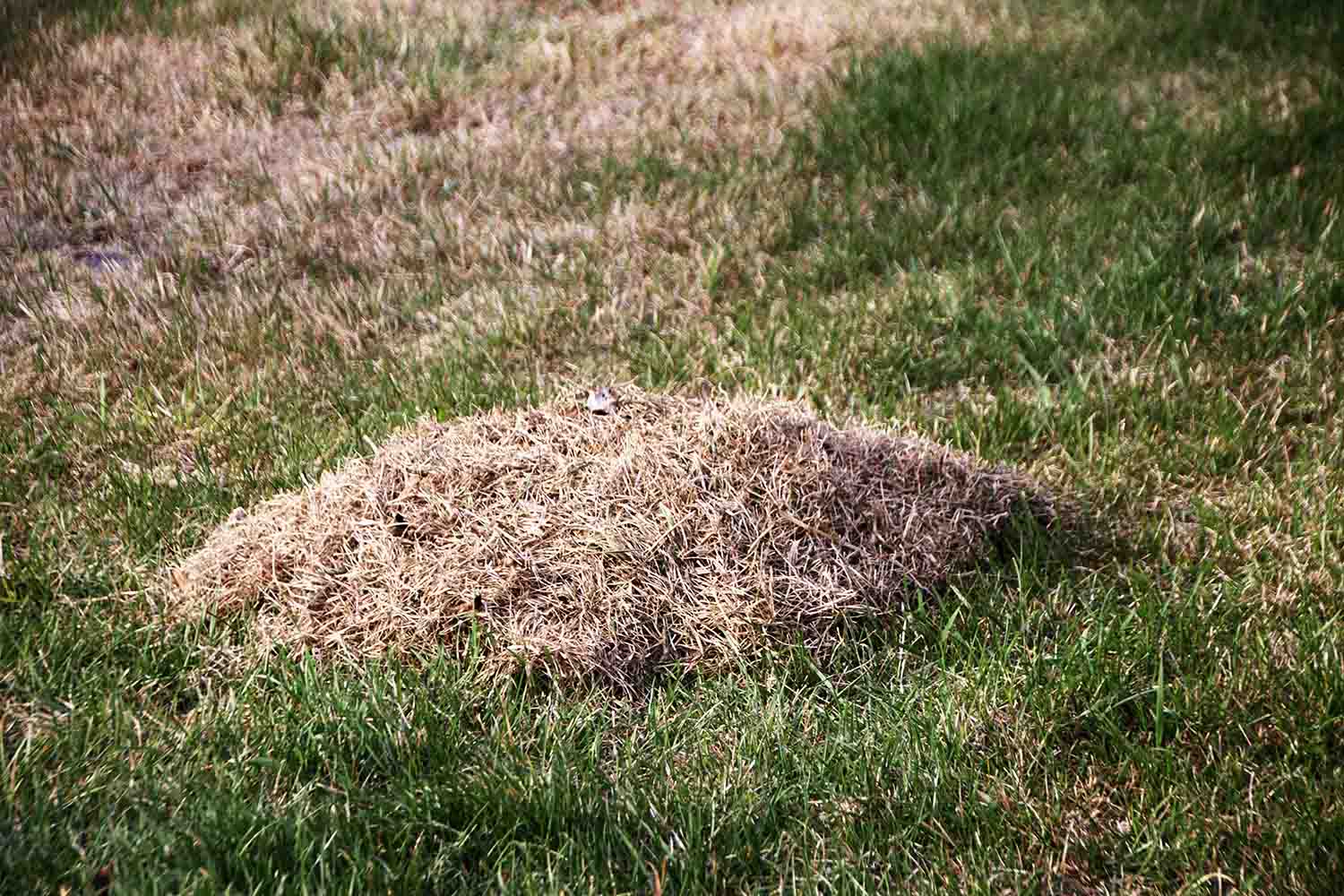
Thatch develops naturally as grass grows, sheds older material, and produces new roots and stems. Certain lawn conditions can contribute to excessive thatch, including aggressive grass growth, heavy fertilization, and soil conditions that slow decomposition.
One common misconception is that grass clippings are the primary cause of thatch. Clippings are generally soft and break down quickly, so leaving them on the lawn after mowing usually doesn't cause excessive buildup.
The goal isn't to eliminate every trace of thatch. A thin layer can help insulate the soil and cushion the lawn. Problems develop when it becomes thick enough to interfere with water movement, root development, and normal turf maintenance.
Excessive thatch isn't always obvious from the surface. A lawn may look green while a dense layer of organic material develops underneath. To check for thatch, use a small shovel to remove a wedge of turf. Examine the brown, fibrous material directly above the soil.
A layer around half an inch thick or more may warrant closer evaluation, especially if the lawn is showing signs of stress. Watch for these common signs:
When thatch becomes too dense, it can interfere with the conditions grass needs to thrive. Water may struggle to penetrate the surface, fertilizer may not reach the soil as effectively, and roots can have difficulty establishing themselves in the ground.
Removing excessive thatch helps address these issues and makes routine lawn care more effective. Key benefits include:
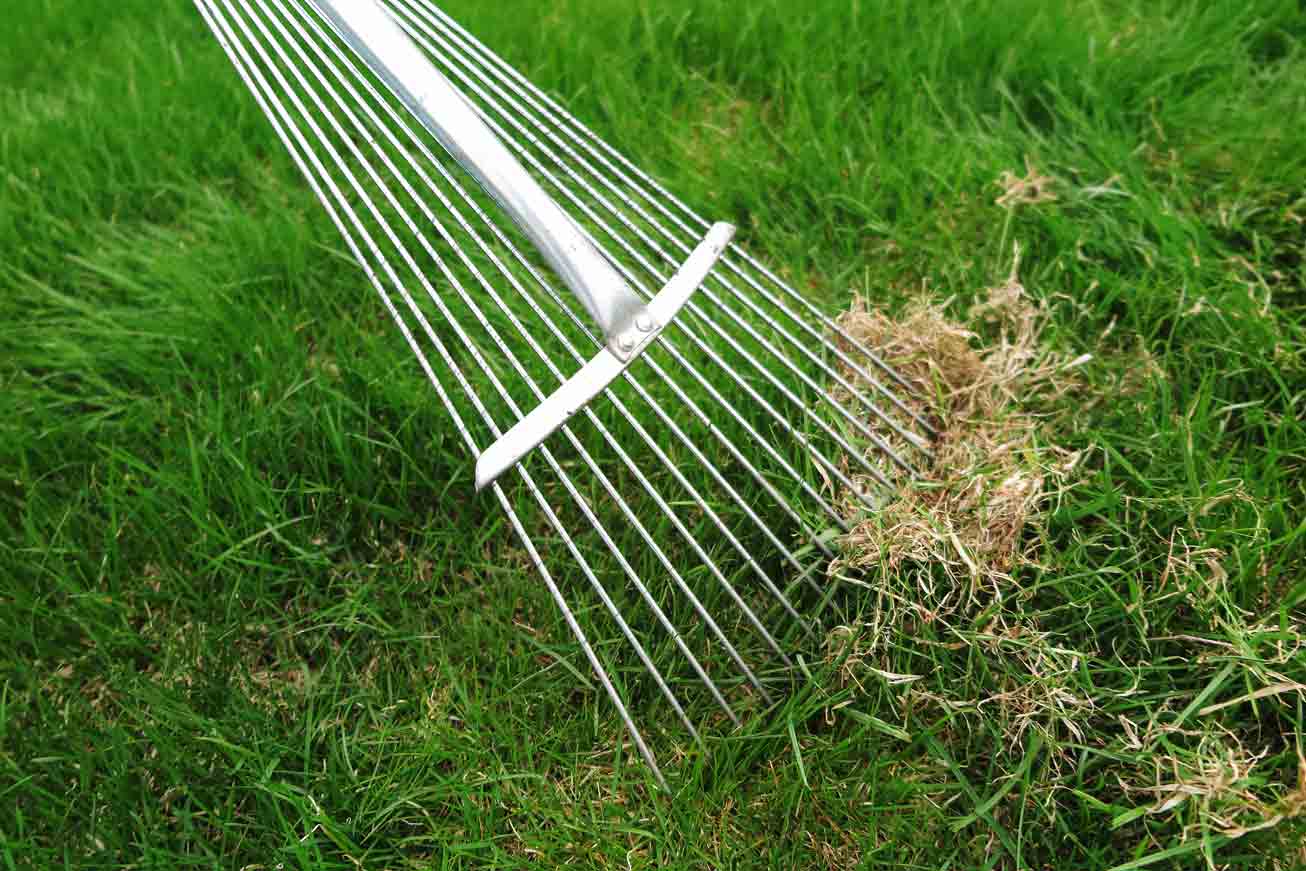
A manual rake may work for small areas with moderate buildup, while powered equipment is often more practical for larger lawns. Both methods loosen and pull up accumulated material so it can be collected and removed.
Because dethatching can be hard on grass, it should be performed when the lawn is healthy enough to recover and actively growing under favorable conditions. Removing too much material or using aggressive equipment on stressed turf can cause unnecessary damage.
After dethatching, the lawn may look rough or thin temporarily. Raking away the loosened debris and providing appropriate watering and maintenance helps support recovery.
The best time to dethatch depends on your grass type and local growing conditions. For Nebraska lawns containing cool-season grasses such as Kentucky bluegrass and tall fescue, late summer and early fall are often favorable because temperatures are more moderate and grass can recover before winter.
Spring may also be appropriate in some situations, but avoid aggressive dethatching when grass is struggling with temperature extremes, drought, or other stress.
Dethatching isn't a task every lawn needs annually. Some lawns develop very little thatch, while others may accumulate it more quickly. Inspecting the lawn periodically helps determine whether removal is necessary instead of relying on a fixed schedule.
Once excessive thatch has been removed, good maintenance practices can help keep it from building up again. The objective is to encourage healthy grass growth while allowing organic material to break down naturally.
A few simple habits can help:
Thatch is a normal part of lawn development, but excessive buildup can prevent water, nutrients, and roots from interacting with the soil as they should. Recognizing the warning signs and removing thatch when necessary can help improve growing conditions and support a healthier lawn.
If you're unsure whether your lawn needs dethatching, a professional lawn care provider can evaluate the buildup, inspect the turf, and recommend an appropriate treatment. Contact us today to learn more about our lawn care services and request a free estimate.
Q: What Exactly Is Thatch in a Lawn?
A: Thatch is a layer of living and dead grass stems, roots, and other organic material that accumulates between the green grass and the soil. A thin layer is normal, but excessive buildup can interfere with lawn health.
Q: Does Leaving Grass Clippings Cause Thatch?
A: Usually not. Grass clippings break down relatively quickly and return nutrients to the soil. Excessive thatch is more closely associated with the accumulation of tougher plant material and conditions that slow decomposition.
Q: How Do I Know If My Lawn Needs Dethatching?
A: Look for a spongy surface, shallow roots, poor water penetration, or a thick brown layer beneath the grass. Inspecting a small section of turf can help you assess the buildup.
Q: Why Is It Important to Remove Excessive Thatch?
A: Removing excessive thatch helps water and nutrients reach the soil, supports deeper root development, and reduces conditions that can favor certain pests and diseases.
Q: How Often Should I Dethatch My Lawn?
A: There is no universal schedule. Some lawns rarely need dethatching, while others accumulate material more quickly. Inspect the thatch layer and remove it when buildup begins affecting lawn health.
Q: What Is the Best Time to Dethatch a Lawn in Nebraska?
A: Late summer and early fall are often suitable for cool-season grasses because conditions generally support recovery. The ideal timing depends on the grass type, weather, and overall lawn condition.

Lincoln's highest-rated lawn care company. Serving the Lincoln, NE area for over 10 years.
Your Lawn. Made Easy.