Last Updated:
May 14, 2026
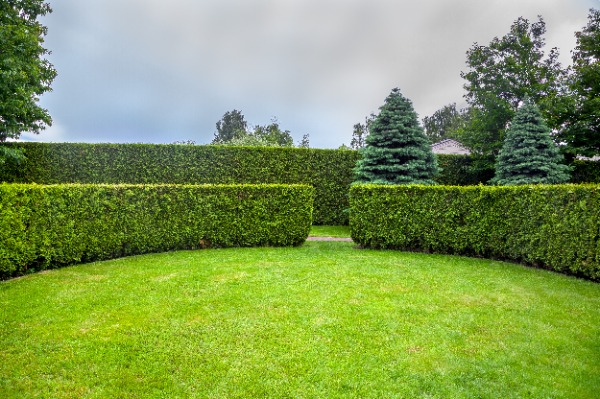
Privacy hedges create quiet outdoor spaces, block unwanted views, reduce noise, and give landscapes an attractive appearance. Unlike decorative shrubs that are trimmed mainly for looks, privacy hedges need a very specific approach to stay healthy and dense from top to bottom.
Poor trimming habits can quickly turn a once-full hedge into a patchy row of thin branches and bare spots. If you’ve been wondering why your hedges look thin, uneven, or overgrown despite regular maintenance, understanding the right trimming techniques can make a dramatic difference.
Every privacy hedge grows differently, and understanding how your hedge naturally develops is the first step toward trimming it correctly. Some hedges grow quickly and aggressively, while others fill in more slowly with dense branching. Evergreen hedges like arborvitae, cypress, and holly respond differently to trimming than broadleaf hedges such as privet or boxwood.
Before trimming, take time to evaluate the hedge as a whole. Look for uneven growth, crowded branches, thinning sections, or areas where sunlight may not be reaching the interior. Cutting without assessing the hedge first often leads to over-trimming certain spots while ignoring areas that actually need attention.
A few important things to check before trimming include:
One of the most common reasons privacy hedges become thin near the ground is improper shaping. Many hedges are trimmed perfectly square or even wider at the top than the bottom, which may look clean at first but eventually blocks sunlight from reaching the lower branches. Those shaded lower sections begin thinning out and losing foliage.
A healthier approach is to maintain a hedge that is slightly wider at the base and narrower toward the top. This allows sunlight to reach the entire plant more evenly, helping maintain dense growth from the ground up while also improving airflow throughout the hedge and reducing the chances of storm or snow damage. A gently tapered shape often creates a fuller, more natural-looking hedge that stays attractive much longer.
It can be tempting to dramatically reduce an overgrown hedge all at once, especially when it starts crowding walkways or windows. However, removing too much growth too quickly can stress the plant and leave permanent bare sections, especially with evergreen privacy hedges that may not regrow from older wood.
Instead of aggressive cutting, focus on gradual trimming that preserves the hedge’s ability to recover naturally. Most privacy hedges respond best when no more than about one-third of the total growth is removed during a single trimming cycle.
When trimming large hedges:
Many people rely entirely on hedge trimmers to shape privacy hedges into flat surfaces. While shearing has its place, relying on it alone can create dense outer shells with weak interiors. Eventually, sunlight cannot penetrate the hedge, and the inside begins to die out.
Selective thinning is one of the best ways to maintain a thick, healthy hedge. Instead of trimming every branch evenly, thinning involves removing certain branches completely to open up the structure and encourage balanced growth throughout the plant.
Selective thinning helps:
Most hedges respond best when trimmed during active growing periods because they can heal and produce new growth more efficiently. For many varieties, late spring or early summer is ideal for more substantial shaping, while lighter maintenance trimming can be done periodically throughout the growing season to control stray growth and maintain appearance.
However, trimming at the wrong time can create unnecessary stress. Heavy pruning during extreme heat or drought may weaken the hedge, while trimming too late in the season can stimulate tender new growth that may not survive colder temperatures. Understanding when your hedge is actively growing and when it is vulnerable helps prevent damage and encourages fuller, healthier coverage.
Privacy hedge trimming becomes much easier when the correct tools are used. Sharp blades create clean cuts that heal faster and reduce stress on the plant. Dull equipment tears branches instead of cutting them cleanly, increasing the risk of disease and browning. Different tools serve different purposes depending on hedge size and branch thickness.
Useful hedge trimming tools include:
One of the biggest issues comes from trimming the top of the hedge wider than the bottom, which gradually shades lower growth and causes thinning near the ground. Other common problems include cutting too deeply into old wood that may not regrow properly, allowing hedges to become severely overgrown before trimming, and using dull blades that tear branches instead of creating clean cuts.
Some homeowners also shear hedges too frequently without thinning the interior, which creates dense outer growth and weak inner branches. Trimming during extreme heat or drought can further stress the plant, while ignoring dead branches inside the hedge may increase the risk of disease and poor airflow.
Q: How often should privacy hedges be trimmed?
A: Fast-growing privacy hedges may need trimming several times during the growing season, while slower-growing varieties may only require one major trim annually. Regular light maintenance usually produces better results than waiting for severe overgrowth.
Q: What is the best shape for a privacy hedge?
A: Slightly tapered hedges with a wider base and narrower top typically stay healthiest because sunlight can reach the lower branches more effectively. This helps prevent thinning near the ground.
Q: Can I cut a hedge back drastically if it gets too large?
A: Some hedges tolerate heavy rejuvenation pruning, but others may struggle to recover if cut too deeply into old wood. Gradual reduction over multiple seasons is usually safer for long-term hedge health.
Q: Why is my hedge turning brown inside?
A: Interior browning is often caused by lack of sunlight and airflow. Dense outer growth can block light from reaching the center of the hedge. Selective thinning can help improve interior health.
Q: Should I use hedge trimmers or hand pruners?
A: Both tools have benefits. Hedge trimmers work well for shaping and maintaining uniformity, while hand pruners are better for selective thinning and detailed cuts that improve structure.
Q: When should I avoid trimming privacy hedges?
A: Avoid major trimming during periods of extreme heat, drought, or late in the growing season when new growth may not harden off before colder weather arrives.


Lincoln's highest-rated lawn care company. Serving the Lincoln, NE area for over 10 years.
Your Lawn. Made Easy.