Last Updated:
July 11, 2026
When soil compaction develops in your lawn, the roots of your grass struggle to access the oxygen, water, and nutrients they need to thrive. Aeration is designed to address this problem, but homeowners often wonder whether liquid aeration or core aeration is the better solution.
While both methods aim to improve soil conditions and support stronger turf growth, they work in very different ways. Core aeration is preferable for struggling and compacted lawns, while liquid aeration can be a better choice for mostly healthy lawns. Keep reading to find out which is right for your property!
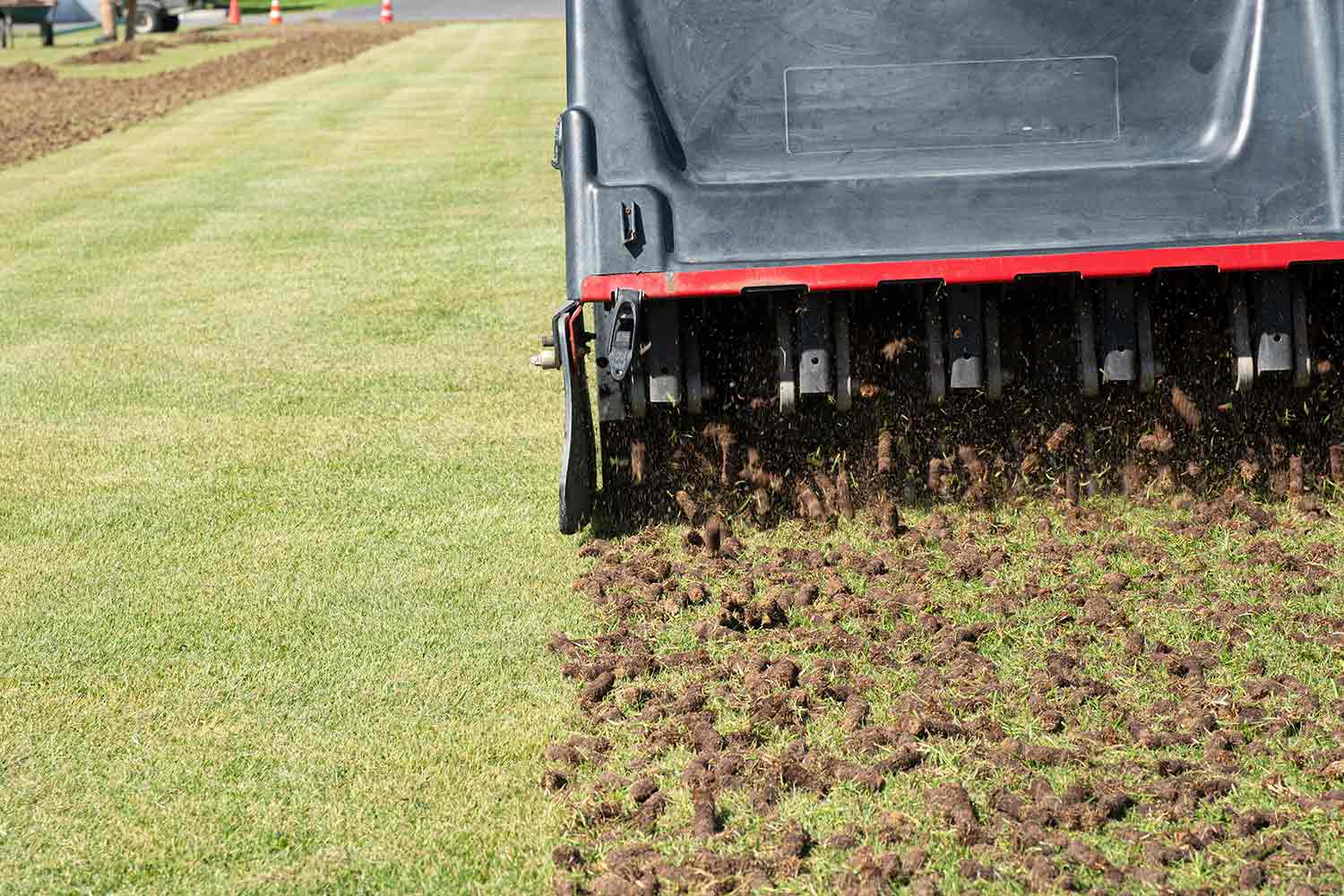
Core aeration is the traditional aeration method used by lawn care professionals throughout the country. This process utilizes specialized equipment that removes small plugs of soil from the lawn, creating thousands of openings throughout the turf.
These holes allow air, moisture, and nutrients to move deeper into the soil profile while reducing compaction. The extracted soil plugs are typically left on the lawn surface where they naturally break down and return nutrients to the soil.
Because it physically removes soil, core aeration provides immediate relief from compacted conditions and creates an ideal environment for root expansion. Core aeration is especially beneficial for lawns experiencing:
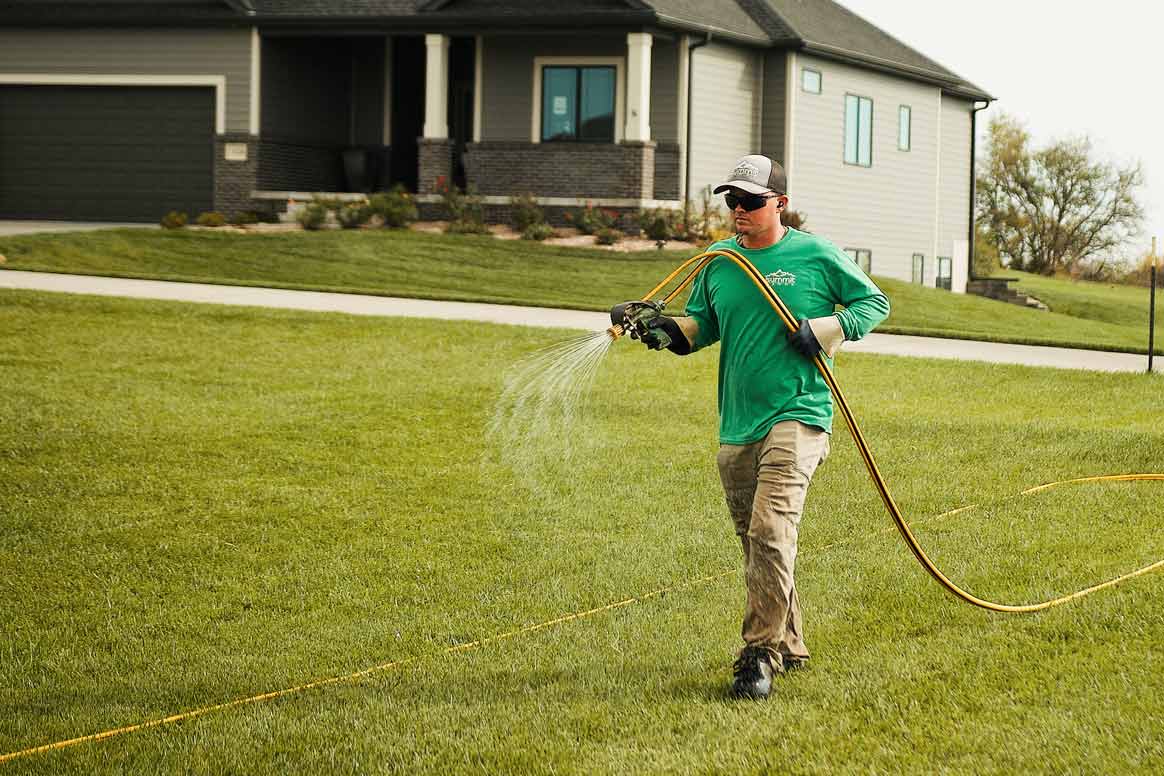
Liquid aeration uses a soil-conditioning solution that is applied across the lawn with a sprayer. Instead of mechanically removing soil plugs, the liquid treatment works by improving soil structure and increasing the movement of water and oxygen through the root system.
Many liquid aeration products contain surfactants, soil conditioners, and biological ingredients designed to loosen dense soil particles and improve overall soil performance. As the treatment penetrates the ground, it helps create microscopic channels that encourage root growth and water infiltration.
While liquid aeration can provide benefits for many lawns, the results typically occur more gradually than traditional core aeration. Liquid aeration is often chosen because it:
Although both services target compacted soil, their approaches are dramatically different. Core aeration physically removes soil from the lawn, immediately creating space for air and water movement. Liquid aeration relies on chemical and biological processes to improve soil conditions over time.
Core aeration generally produces more noticeable short-term results, particularly in lawns with severe compaction. Liquid aeration tends to work best as a supplemental treatment or for properties experiencing mild soil density issues.
Another major difference is depth. Core aeration directly affects the roots by creating openings several inches deep. Liquid aeration primarily works through soil conditioning and may require multiple applications to achieve comparable improvements.
For many homeowners, core aeration remains the gold standard for addressing compaction problems. The holes created during core aeration also provide excellent seed-to-soil contact, making it one of the most effective services to pair with overseeding.
New grass seed can settle into the openings and establish stronger root systems during germination. Core aeration is often recommended when:
Liquid aeration can be a useful option in certain situations, especially when compaction is not severe.
Properties with irrigation restrictions, decorative landscaping features, or sensitive turf areas may benefit from periodic liquid aeration treatments. However, expectations should remain realistic, as liquid products typically do not replace the mechanical benefits of removing soil cores. Many homeowners choose liquid aeration because it can:
In many cases, combining both services can provide the greatest overall benefit. Core aeration addresses physical compaction by creating channels throughout the soil profile, while liquid aeration can help improve soil structure and moisture movement between mechanical aeration treatments.
Many lawn care professionals use liquid aeration as a supplemental treatment throughout the growing season while continuing to perform annual core aeration during peak growth periods. This combination approach can maximize root development, nutrient uptake, and overall turf health.
For lawns suffering from significant compaction, core aeration generally delivers superior results. The physical removal of soil provides immediate benefits that liquid products cannot fully replicate.
That said, liquid aeration can still play a valuable role in a comprehensive lawn care program. It may help improve soil conditions, enhance water penetration, and support healthier turf when used appropriately.
The best solution ultimately depends on your lawn's condition, soil type, and long-term goals. For most homeowners seeking the greatest improvement in turf density and root growth, core aeration remains the most effective standalone aeration method.
Both liquid aeration and core aeration are designed to improve the health of your lawn, but they achieve that goal in different ways. Core aeration physically relieves soil compaction and creates immediate pathways for oxygen, water, and nutrients. Liquid aeration focuses on conditioning the soil and improving movement of these resources over time.
If your lawn struggles with compacted soil, thinning grass, or poor drainage, core aeration will typically provide the most noticeable improvement. Liquid aeration can be a helpful supplement, but it should generally be viewed as an addition to (not a replacement for) traditional core aeration.
Investing in the right aeration strategy can lead to deeper roots, thicker turf, improved drought tolerance, and a healthier lawn throughout the growing season.
Q: Is liquid aeration as effective as core aeration?
A: Liquid aeration can improve soil conditions, but it generally does not provide the same level of compaction relief as core aeration. For heavily compacted lawns, core aeration is usually more effective.
Q: Does liquid aeration remove soil plugs?
A: No. Liquid aeration does not physically remove soil. Instead, it uses soil-conditioning ingredients to improve water and oxygen movement within the soil.
Q: How often should a lawn be core aerated?
A: Most cool-season lawns benefit from core aeration once per year, typically during periods of active growth in the spring or fall.
Q: Can I overseed after liquid aeration?
A: You can, but core aeration generally provides better seed-to-soil contact and often leads to improved germination rates when overseeding.
Q: Is liquid aeration safe for established lawns?
A: Yes. When applied correctly, liquid aeration products are generally safe for established turf and landscaping.
Q: Can liquid aeration and core aeration be performed together?
A: Absolutely. Many lawn care professionals combine both treatments to improve soil structure, reduce compaction, and support long-term lawn health.


Lincoln's highest-rated lawn care company. Serving the Lincoln, NE area for over 10 years.
Your Lawn. Made Easy.